CNC Glass Cutting vs. Manual Glass Cutting: Why Precision Matters
As glass fabrication technology has evolved, CNC cutting has become the industry standard for architectural glass. Here's why precision-cut glass delivers better results, fewer errors, and faster turnaround for contractors and builders.
Rez Glass Industries 2026-02-25
CNC Glass Cutting vs. Manual Glass Cutting: Why Precision Matters
For decades, skilled glaziers cut glass by hand — scoring the surface with a steel wheel and snapping it along the score line. It was a craft, and in the right hands, it produced acceptable results. But as architectural glass demands have grown more complex, the limitations of manual cutting have become impossible to ignore.
Today, CNC (Computer Numerical Control) glass cutting is the standard for any serious fabrication operation. At Rez Glass Industries, all of our cutting is done on CNC equipment — and for good reason. Here's a detailed breakdown of why it matters for your projects.
What Is CNC Glass Cutting?
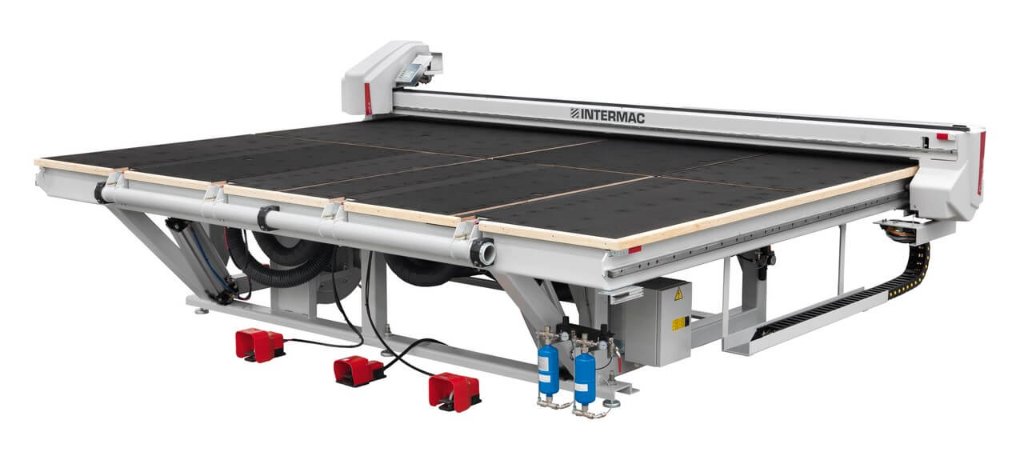
CNC glass cutting uses computer-controlled machinery to score and cut glass panels with extreme precision. A digital file — typically drawn in CAD software — is fed directly into the machine, which then guides a diamond-tipped cutting wheel across the glass surface with exact speed and pressure.
Modern CNC glass cutting systems can also perform:
- Straight line cuts to tolerances of ±0.5mm or tighter
- Shaped and radius cuts for custom profiles
- Simultaneous optimization — nesting multiple pieces on a single sheet to reduce waste
- Automated breaking and sorting on fully integrated lines
What Is Manual Glass Cutting?
Manual glass cutting involves a glazier using a handheld glass cutter — a small tool with a hardened steel or tungsten carbide wheel — to score the glass surface, followed by controlled pressure or tapping to snap the glass along the score line.
For simple, straight cuts on standard sizes, an experienced cutter can achieve decent results. But manual cutting has hard limits:
- Accuracy depends entirely on the individual's skill and consistency
- Curved or irregular shapes are extremely difficult to execute repeatably
- Tolerance control becomes unreliable at tight dimensions
- Waste rates are significantly higher
- Speed drops sharply on complex or high-volume orders
Side-by-Side Comparison
| Factor | Manual Cutting | CNC Cutting | |---|---|---| | Tolerance | ±2–3mm (best case) | ±0.5mm or better | | Repeatability | Variable (operator-dependent) | Consistent across every piece | | Complex Shapes | Very difficult | Straightforward | | Speed | Slow on volume | Fast — optimized per sheet | | Waste | Higher | Minimized through nesting software | | Labour Cost | High (skilled trade) | Lower per unit | | Error Rate | Higher | Significantly lower | | Custom Holes/Notches | Requires separate step | Integrated workflow |
Why Tolerance Matters in Architectural Glass
In glass fabrication, a few millimetres of error can be the difference between a panel that fits perfectly and one that has to be remade entirely.
Consider a frameless shower enclosure with a fixed panel, a door, and a return. Each piece must account for the hardware, the channel or clamp tolerances, and the plumb of the walls. If any one piece is off by 3mm, the entire assembly is compromised.
With CNC cutting at ±0.5mm tolerance:
- Panels fit to spec on the first delivery
- Hardware aligns correctly
- Installation time is reduced
- Callbacks and remakes are minimized
For contractors, this translates directly to fewer delays and better margins.
Complex Shapes: Where Manual Cutting Fails
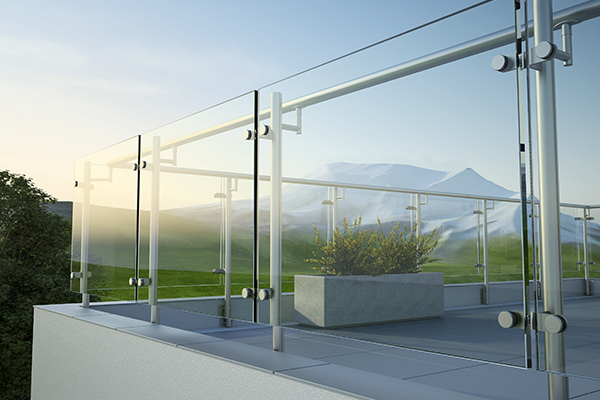
Manual glass cutting is essentially limited to straight lines. Any curve, radius corner, or irregular polygon requires significant skill and time — and even then, repeatability is nearly impossible across multiple pieces.
CNC machines handle complex shapes as readily as straight cuts. Common profiles we cut regularly include:
- L-shapes and U-shapes for structural glazing
- Radius corners on shower panels and tabletops
- Notched panels for hardware recesses
- Curved handrail glass for custom staircases
- Irregular polygons for sloped or architectural applications
All of these are programmed once and cut identically every time, regardless of quantity.
Material Optimization and Waste Reduction
One of the less obvious advantages of CNC cutting is sheet optimization.
CNC software automatically calculates the most efficient way to nest multiple pieces on a single glass sheet, minimizing offcuts and waste. On large orders, this can reduce material consumption by 10–25% compared to manual layout.
For contractors ordering multiple units, this directly affects pricing — less waste means lower material cost, which we pass on through competitive pricing.
Speed and Lead Times
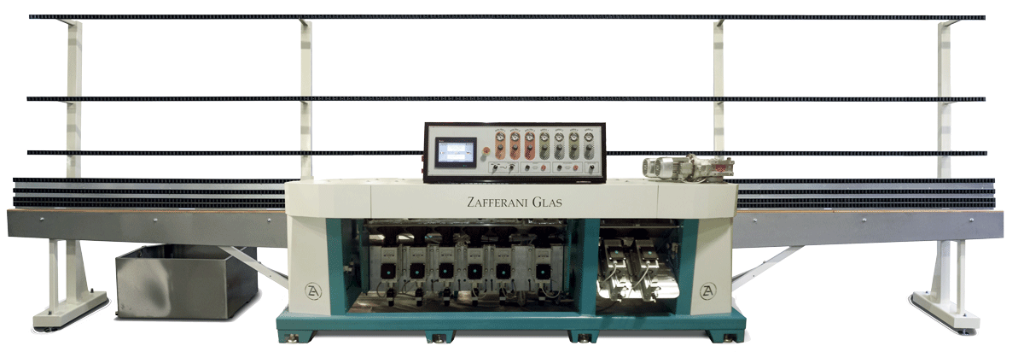
Manual cutting is inherently slow on volume. A skilled cutter can process a limited number of pieces per hour, and complex shapes require significantly more time.
CNC cutting dramatically accelerates production:
- Straight cuts on standard panels can be processed in seconds per piece
- Complex shapes that would take 20–30 minutes manually can be cut in 2–3 minutes
- Batch processing allows multiple jobs to run sequentially with minimal setup time
This is why Rez Glass Industries can consistently deliver custom orders in 2–7 business days — our CNC lines run efficiently with minimal downtime.
Integrated Fabrication: CNC as Part of the Workflow
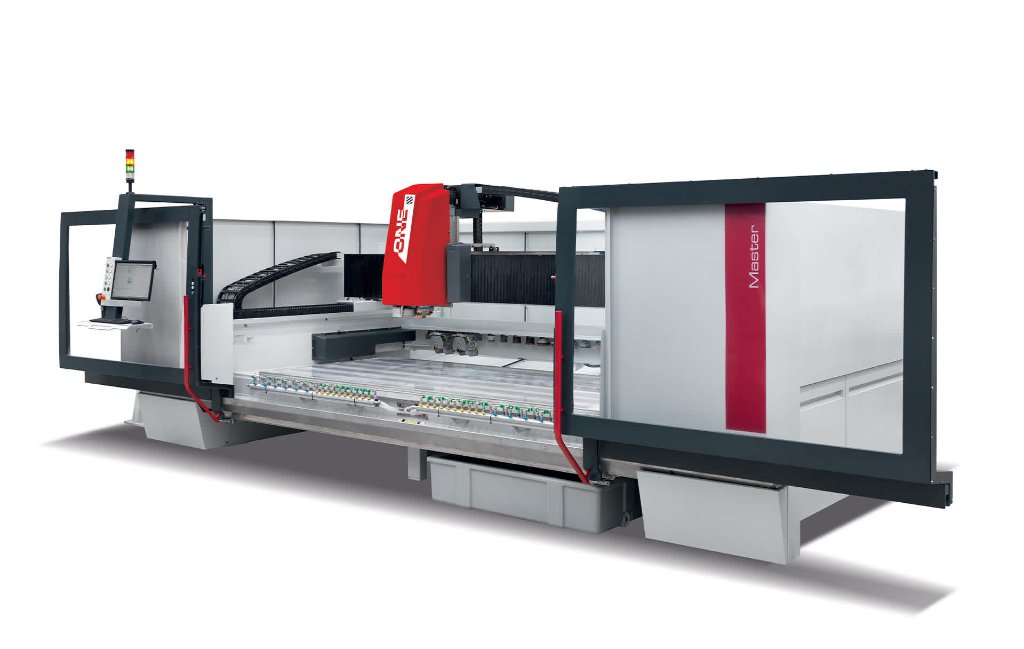
At our facility, CNC cutting is the first step in an integrated fabrication workflow:
- CNC Cutting — panels cut to exact dimensions from the digital file
- Edge Processing — automated polishing and beveling machines work to pre-defined edge profiles
- CNC Drilling — holes and cutouts machined to exact positions
- Washing — automated cleaning before tempering or laminating
- Tempering or Laminating — thermal processing or interlayer bonding
- Quality Inspection — each piece measured and checked against the original specification
Because dimensions are set digitally at the start and carried through every stage, errors introduced at one step are caught and corrected before they compound downstream.
When Manual Cutting Is Still Used
To be fair, manual glass cutting still has a place:
- On-site adjustments — when a panel needs minor trimming on a job site, a skilled cutter with a hand tool is the practical solution
- One-off small pieces — for simple rectangles in low-tolerance applications, manual cutting is fast
- Historical restoration — specialty or antique glass work sometimes requires traditional methods
But for any production fabrication — especially architectural glass destined for showers, railings, storefronts, or structural applications — CNC is the only appropriate choice.
What This Means for Your Project
When you source glass from a fabricator using CNC equipment, you're getting:
- Panels that fit — no surprises on site
- Consistent quality across every piece in an order
- Faster turnaround without sacrificing accuracy
- Complex shapes executed reliably
- Documentation — digital files mean every dimension is traceable
When you source from a manual-only operation, you're accepting variability — and variability in glass means callbacks, remakes, and installation delays.
The Rez Glass Standard
At Rez Glass Industries, every panel that leaves our facility has been cut on CNC equipment, processed through our automated edge lines, and inspected against spec before shipping.
We built our operation around CNC fabrication from the beginning — because we've worked in the field long enough to know what happens when glass doesn't fit.
Our capabilities include:
- CNC cutting to ±0.5mm tolerance
- Panels up to 130" x 96"
- Radius cuts, notches, holes, and custom profiles
- Integrated tempering and laminating
- 2–7 business day lead times on custom orders
- Free delivery across the GTA
Planning a project that requires precision-cut glass? Get a quote from our team — we respond within 24 hours.